Google or ChatGPT: Where Do Customers Search in 2026?
- How is a Google search different from a ChatGPT question?
- When does Google remain especially important?
- When can AI-based search be more useful?
- The same website can serve both search modes
- What should a business be doing right now?
- It's not the search interface you need to win over — it's the customer's question
- Frequently asked questions
- Is ChatGPT taking over from Google?
- Do you need separate content for Google and ChatGPT?
- Which one should you focus on first?
For a long time, if someone needed a new accountant, a restaurant, a web designer, or a marketer, it was almost automatic that they'd start on Google. Today, more and more people are also turning to AI-based tools: instead of typing keywords, they describe what they need and expect a summarized answer with recommendations.
As a business owner, it's easy to feel like you now have to pick a side — should you optimize for Google or for ChatGPT? That's not really the right question. The two search modes don't simply replace each other; they support users in different situations with different expectations.
How is a Google search different from a ChatGPT question?
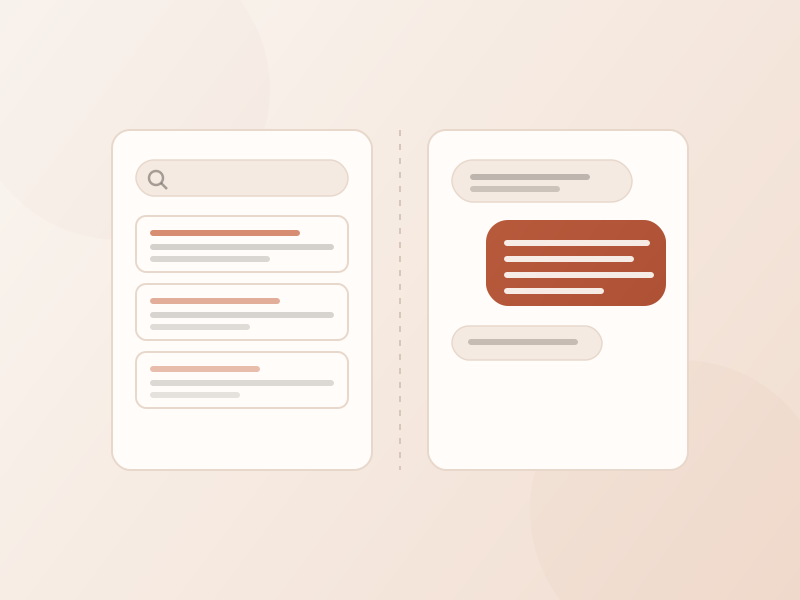
On Google, we often start with short search phrases: "accountant downtown," "family-friendly restaurant near me," or "blog writing for businesses." From the results page, we then pick which website to open, and can compare several sources ourselves.
On ChatGPT, by contrast, it feels more natural to ask a compound question: "I'm looking for a marketer who can write my website copy but also cares about SEO. What should I look out for when choosing?" The user expects not just results, but an interpreted answer, decision criteria, and a next step.
When does Google remain especially important?
Google remains a strong starting point when someone is looking for a specific local service and wants a map, opening hours, reviews, photos, or several offers to compare quickly. Your own website, your Google Business Profile, and the search results together can matter a lot before an immediate decision.
In a search engine, users also see the different sources directly. That's why a well-built service page, a precise title, a compelling meta description, and content that genuinely matches search intent remain valuable.
When can AI-based search be more useful?
AI-based search can be convenient when a question is complex, when the user doesn't yet know the exact professional terminology, or when they first want to understand their options. In these cases, they're not necessarily curious about one specific company name — they also want to know what criteria should guide their decision.
For businesses, that means simply existing online isn't enough. What's needed is content that explains the service, answers related questions, and makes clear who the company can help and with what — I go into this in more depth in my article on ChatGPT SEO.
The same website can serve both search modes
You don't need one website for Google and a separate one for ChatGPT. Most of the good foundations overlap: technically accessible pages, clear service descriptions, articles that answer real questions, consistent business information, and credible content.
There's no point looking for an exclusive winner between Google and ChatGPT. The customer's goal is the same in both places: finding a reliable answer and a good solution.
The difference is more a matter of emphasis. Traditional SEO cares a lot about search phrases and understanding the results page. AI visibility places even more value on directly answering questions, precise wording, and content from which a standalone, understandable answer can be assembled.
What should a business be doing right now?
Give your most important services their own, detailed pages.
Base your blog topics on questions customers actually ask.
Keep your business name, contact details, and service descriptions consistent everywhere they appear.
Make sure your website is crawlable by both traditional and approved AI search bots.
Don't just track rankings — watch your traffic sources, contact requests, and recurring questions too.
It's not the search interface you need to win over — it's the customer's question
There's no point looking for an exclusive winner between Google and ChatGPT. The customer's goal is the same in both places: finding a reliable answer and a good solution. The business that comes out ahead is the one that communicates clearly, usefully, and credibly what it can help with.
Gozu Marketing's SEO-focused content creation helps build website and blog content that doesn't just exist online, but actually answers real questions.
Frequently asked questions
Is ChatGPT taking over from Google?
That can't be said with certainty. The two platforms serve different search situations, so businesses should currently prepare for both.
Do you need separate content for Google and ChatGPT?
Not necessarily. Well-structured, precise, and useful content can be a valuable foundation in both environments.
Which one should you focus on first?
It's worth fixing your own website's technical and content foundations first. Both traditional SEO and AI visibility can be built on top of that.
Want your business to stay findable across both search environments?
Gozu Marketing's SEO-focused content creation helps build website and blog content that holds up in both traditional Google search and AI-generated answers.
Get in touch